

Last Updated: October 30, 2026
Quick Summary
To choose a breathable fitness band, prioritize airflow and drying speed: woven nylon breathes across the whole band, while perforated silicone vents through holes and rinses clean fast. Then check that the fit is snug but not tight, so air can still move under the band. Match the material to your sweat level, climate and daily routine, and a breathable fitness band stays comfortable all day.
- Woven nylon offers airflow across the whole band but needs a full wash and dry.
- Perforated silicone wipes clean quickly and dries very fast after sweaty sessions.
- Check that perforations run the full length of the band, not just the center.
- Slide one finger under the band; it should pass with slight resistance.
- Size up rather than down, since an adjustable band is easier to live with than a tight one.
Table of Contents
- Why Breathability Matters More Than You Think
- Comparing Band Materials: Nylon vs Silicone for Exercise
- How to Prevent Skin Irritation from Fitness Trackers
- Finding the Right Fit and Sizing for Sweaty Wrists
- Matching Your Band to Climate and Workout Type
- How to Clean Fitness Tracker Bands Properly
- Your Next Step: Shop Breathable Bands That Fit Your Routine
- Frequently Asked Questions
Why Breathability Matters More Than You Think
If you have ever taken off your fitness band after a workout and found a damp, warm wrist underneath, you already know the problem. Breathability is one of the most overlooked features when you choose a breathable fitness band, yet it shapes how comfortable your tracker feels from morning to night.
A band that traps heat and sweat can make you want to take your tracker off, which means you stop tracking your activity. Many women find that a breathable band keeps them wearing their tracker all day, including during workouts and long days at the desk.
Here is what breathability does for you:
- Lets air move across your skin
- Helps sweat dry faster
- Reduces that sticky, warm feeling
- Makes all-day wear feel easier
Look for perforations, woven fabric, or lightweight silicone when you shop.
Comparing Band Materials: Nylon vs Silicone for Exercise
Two materials dominate the breathable band market: woven nylon and silicone. For a deeper look at how nylon and silicone handle summer heat and sweaty sessions, see nylon vs silicone bands for summer comfort. Each has real strengths and real trade-offs, and the right pick depends on how you move, how much you sweat, and how sensitive your skin is. Here is what actually happens on your wrist during a workout.
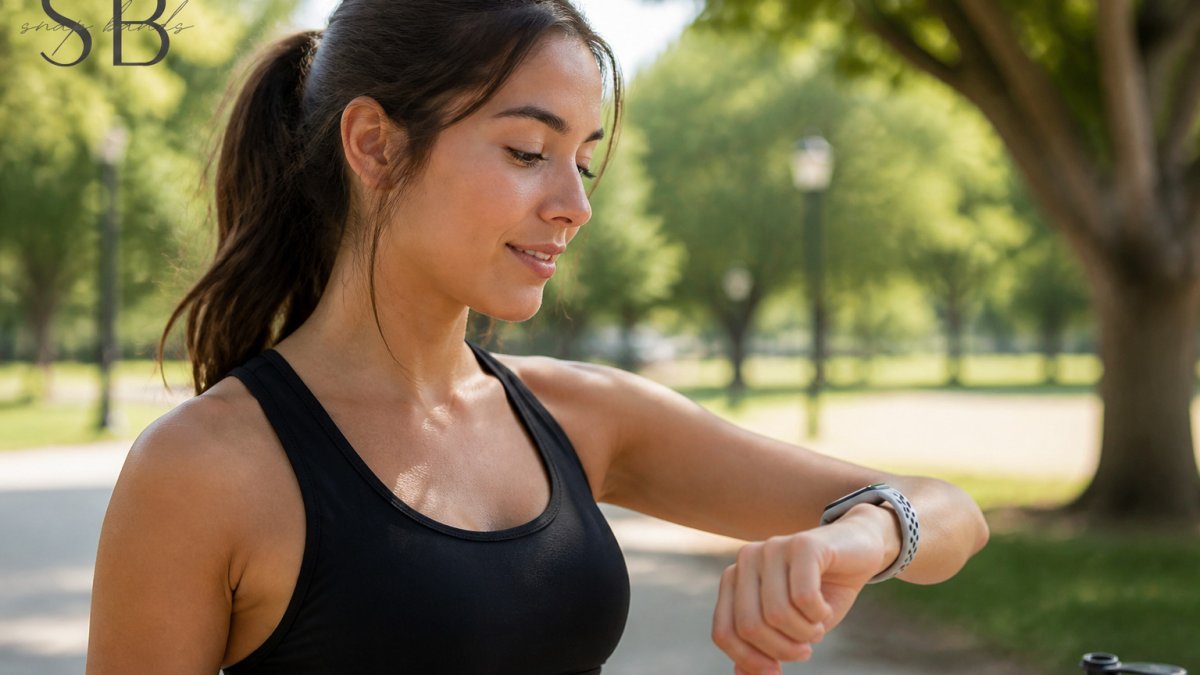
Woven nylon is a fabric, so it behaves like fabric. The weave creates tiny gaps between threads that let air pass through and let moisture wick away from your skin. That is why nylon feels cool at the start of a workout and dries relatively fast afterward. The trade-off is that nylon absorbs sweat into the fibers, so a soaked band stays damp longer than a silicone one if you do not rinse and air-dry it. Nylon also has a soft, fabric-like hand feel that many women prefer for long wear, but the texture can trap dead skin and lotion residue over time, so it needs a real wash, not just a wipe, every few sessions.
Silicone is non-porous. On its own, a solid silicone band can hold heat and sweat against your skin. Perforated silicone adds small holes through the band, which let some air move through it. The trade-off is that perforations only ventilate the areas directly under the holes; the solid sections still sit flush against your skin, and friction from a stiff silicone edge can irritate sensitive wrists during long sessions.
Here is a side-by-side:
| Feature | Woven Nylon | Perforated Silicone |
|---|---|---|
| Airflow mechanism | Breathable weave across the whole band | Holes create localized vents |
| Sweat handling | Wicks and absorbs; needs full drying | Repels sweat; wipes clean fast |
| Drying time | Fast if hung to air-dry; slower if bunched | Very fast; minimal absorption |
| Skin feel | Soft fabric, low friction once broken in | Smooth but can catch on dry skin |
| Irritation risk | Low friction; watch for soap residue | Lower with perforations; edge friction possible |
| Best for | Heavy sweat, humid climates, all-day wear | Swimming, quick rinses, daily wear |
A practical rule many women land on: choose woven nylon when you want maximum airflow across the whole band and do not mind a proper wash-and-dry routine; choose perforated silicone when you want something you can rinse in the sink and wear again within minutes. If your skin is reactive, patch-test a new band on a short walk before committing to a long workout.
Our pick for intense workouts is the 2 Pack Yoro Nylon Woven Band, which is made from double-sided woven nylon and is a durable, breathable option for active days. If you prefer silicone, the Enzo Sporty Perforated Band pairs a soft, flexible feel with airflow holes.

How to Prevent Skin Irritation from Fitness Trackers
Skin irritation is one of the most common complaints about fitness bands. A rash or redness often comes from trapped sweat, friction, or a material that does not agree with your skin.
A few simple habits can help:
- Rinse your band after sweaty workouts
- Dry your wrist before putting the band back on
- Avoid wearing the band too tight
- Give your skin a break from the band at night when possible
If silicone has bothered your skin in the past, you may want to try a perforated design, since its holes let some air move through the band. The MINNITI PERFORATED SILICONE BAND is one option with a soft touch and breathable holes.

Finding the Right Fit and Sizing for Sweaty Wrists
Fit is where breathability and sensor accuracy pull against each other. Optical heart-rate sensors on the back of your tracker need steady skin contact to read your pulse, but a band tight enough to guarantee that contact can also seal off airflow and trap sweat. The goal is not the tightest fit, it is the most stable fit that still lets air move.
Start with a baseline fit check on your usual wrist:
- Slide one finger under the band. It should pass with slight resistance, not freely and not with effort.
- Rotate your wrist and flex your hand. The band should stay put without pinching or sliding down toward your hand.
- Check the sensor. The optical window on the back should sit flat against your skin with no gap when your arm is relaxed.
- Sweat-test it. Do a short workout and notice whether the band migrates, rubs, or leaves deep indentations. Red marks that fade within minutes are normal; marks that persist or sting mean the band is too tight.
Wrists change size during the day. Heat, exercise, and even salty meals can cause mild swelling, so a band that fits perfectly at 8 a.m. may feel tight by afternoon. Adjustable bands, hook-and-loop nylon or silicone with multiple notches, let you loosen by one setting before a workout and tighten again for heart-rate-focused sessions. If you are between sizes, size up rather than down; a slightly loose band you can adjust is easier to live with than a snug band you cannot loosen.
For breathable bands specifically, placement matters as much as tightness. If your band has a rigid buckle or clasp, position it on the outer side of your wrist so it does not press into your skin when you rest your arm on a desk.
Some people keep one band for workouts and one for desk wear, swapping them rather than constantly readjusting a single band.
Matching Your Band to Climate and Workout Type
Your climate and your workouts shape which band works best. A hot, humid summer calls for different features than a cool winter run.
- Hot and humid climates: Choose woven nylon or perforated silicone that dries quickly.
- Heavy sweat workouts: Pick a band with plenty of airflow and easy cleaning.
- All-day wear at the office: Lightweight silicone with a soft, flexible feel works well.
- Casual wear and style: A bold color or pattern lets you express your personal flair.
Many women switch bands depending on the day. Keeping one breathable band for workouts and a second for everyday wear can help you stay comfortable and stylish.
How to Clean Fitness Tracker Bands Properly
Regular cleaning keeps your band fresh and helps prevent odor and irritation. Both nylon and silicone are easy to care for, but the method is slightly different.
For woven nylon bands:
- Rinse with lukewarm water after each sweaty session.
- Use a small amount of mild soap and gently scrub.
- Rinse well and let it air dry completely before wearing.
For silicone bands:
- Wipe with a damp cloth after workouts.
- Use mild soap for a deeper clean.
- Dry the band and your wrist before putting it back on.
Your Next Step: Shop Breathable Bands That Fit Your Routine
Choosing a breathable fitness band comes down to matching the material, fit, and features to your climate, your workouts, and your skin. Start with airflow and comfort, then pick a style that makes you feel like yourself.
Ready to find your match? Browse our breathable bands at Snap Bands, including the Safari Silicone Band for a bold, adventurous look. Our collection is designed to move with you from the office to your next adventure, so you can wear your tracker comfortably all day long.

Frequently Asked Questions
What material is best for a fitness tracker band to prevent sweat rash?
Woven nylon and perforated silicone are breathable options, since they let some air move across the skin. Rinse your band after sweaty workouts and dry it fully before wearing it again.
Are silicone bands breathable for working out?
Perforated silicone bands have small holes that let some air move through the band. The Minniti Perforated Silicone Band and the Enzo Sporty Perforated Band both use this design and are breathable, lightweight, and durable.
How do I clean my fitness tracker band to prevent skin irritation?
Rinse your band after sweaty workouts and let it dry fully before wearing it again.
Is nylon or silicone better for high-intensity workouts?
The 2 Pack Yoro Nylon Woven Band is a durable, breathable option for workouts and an active lifestyle, with a double-sided woven nylon design. The Enzo Sporty Perforated Band offers a soft, flexible feel if you prefer silicone.


