

Table of Contents
- Nylon vs Silicone Bands for Summer Comfort: The Quick Comparison
- Nylon Watch Band Pros and Cons for Hot Weather
- Silicone Watch Band Pros and Cons for Hot Weather
- Sweat, Moisture, and Skin Sensitivity: What Happens Against Your Wrist
- The Best Watch Band for Hot Weather by Activity
- How to Clean a Silicone Watch Band (and Keep Nylon Fresh)
- Conclusion: Choosing Your Summer Strap
- Frequently Asked Questions
Last Updated: October 5, 2026
Nylon vs Silicone Bands for Summer Comfort: The Quick Comparison
Nylon vs silicone bands for summer comfort comes down to one trade-off: nylon breathes, silicone handles water. Nylon's woven fabric lets air move across your wrist so sweat evaporates instead of pooling; silicone shrugs off pool water and heavy sweat but traps heat against the skin.
This guide from Snap Bands breaks down how each material behaves in heat and humidity, where each one fails, and which band suits swimming, running, or a long office day.
How the Two Materials Behave in Heat and Humidity
Nylon is a woven fabric with tiny gaps between threads.
Silicone is a synthetic rubber, forming a solid, non-porous surface. Water beads off and sweat cannot soak in, but that sealed surface blocks airflow, so heat builds between band and skin.
In practice, woven nylon feels cooler within minutes outside; silicone feels fine at first, then clammy once you move.
Side-by-Side Summer Comfort at a Glance
| Factor | Nylon Band | Silicone Band |
|---|---|---|
| Breathability | High, woven airflow | Low unless perforated |
| Sweat handling | Wicks and dries | Wipes clean, traps heat |
| Water resistance | Damp but wearable | Waterproof, swim-ready |
| Drying time | Slower after soaking | Fast, wipes dry |
| Skin feel | Soft, fabric-like | Smooth, rubbery |
| Best for | Daily wear, humidity | Workouts, swimming |
Nylon Watch Band Pros and Cons for Hot Weather
The biggest advantage of a nylon watch band in hot weather is airflow. A woven or knit band lets heat escape instead of sealing it in, which keeps the wrist feeling dry through a long, humid day. Elastic knit versions slide on without buckles and sit lightly against the skin. Our textile breathability and moisture management overview explains why woven structures move vapor more effectively than solid sheets.

Pros:
- Breathes well, so sweat evaporates instead of pooling
- Soft and lightweight, with an adjustable, forgiving fit
- Flexible enough to wear loose without slipping off
Cons:
- Soaks up water and takes longer to dry
- Needs regular washing to stay fresh
- Can chafe if worn too tight against damp skin
Silicone Watch Band Pros and Cons for Hot Weather
Silicone wins on water and cleanup. It does not absorb sweat, so you can rinse, wipe, and wear it again within minutes. Perforated designs add ventilation holes that fix most of the clamminess.
Pros:
- Waterproof and swim-proof, ideal for pool and ocean
- Wipes clean in seconds, resists odor buildup
- Holds its shape and color well over time
Cons:
- Solid silicone traps heat and sweat against the skin
- Can feel sticky in high humidity
- Cheaper formulations may irritate sensitive skin
Sweat, Moisture, and Skin Sensitivity: What Happens Against Your Wrist
Skin irritation in summer usually comes from trapped moisture and friction, not the band material alone. Both nylon and silicone can cause it if the band sits tight and stays damp.
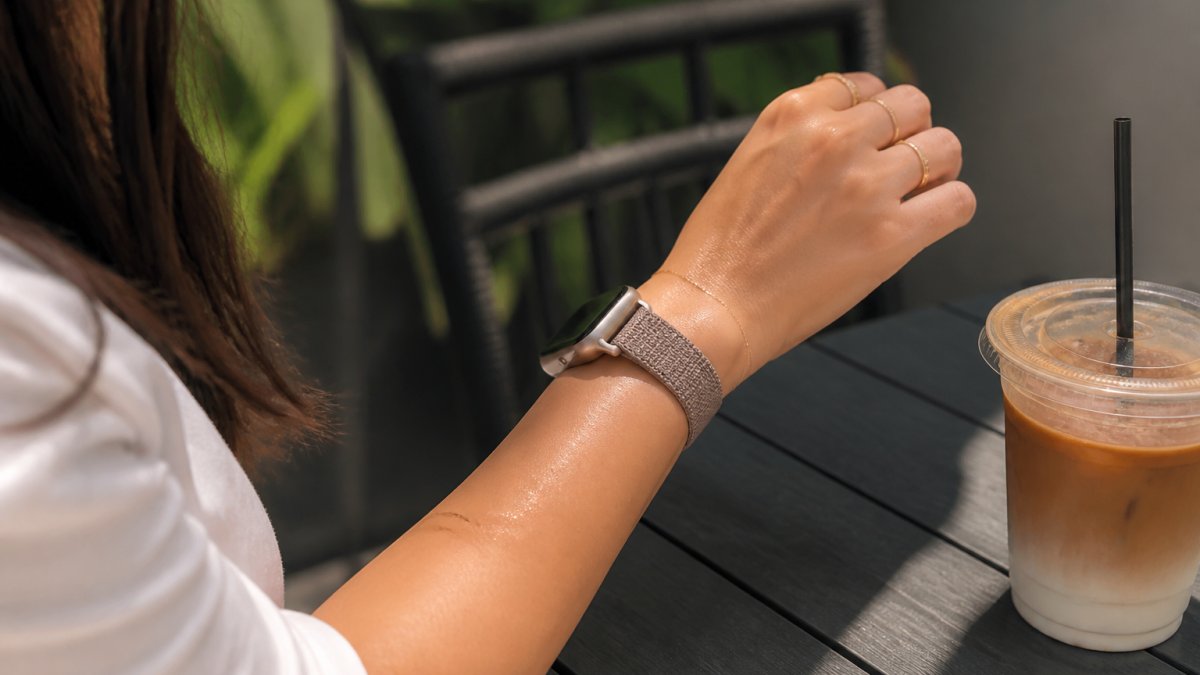
Silicone has one edge here. Because it does not absorb sweat, you can rinse it clean after every workout, which removes the salt and bacteria that trigger irritation.
Fit, Strap Tightness, and Airflow Against the Wrist
Airflow depends on fit as much as material. A band worn snug blocks the gap where air would otherwise move, so even breathable nylon feels hot.
Aim for a fit that lets you slide one finger under the band, that small gap is where airflow happens. Elastic nylon bands self-adjust and rarely sit too tight, while silicone bands with pin-and-tuck closures need a deliberate loose setting for summer.
The Best Watch Band for Hot Weather by Activity
Comfort comes down to how much you sweat, how long the band stays wet, and how much air moves across your wrist. Here is how that plays out across the situations women actually run into between June and September.
Humid commutes and long office days
When the air itself is heavy, a solid silicone band has nowhere to send your sweat, it sits between strap and skin, and by mid-morning your wrist feels slick. A woven or knit nylon band lets moisture travel along the fibers and evaporate, so the surface against your skin stays drier.
- Best pick: a soft knit nylon band worn one notch looser than usual.
- Why it works: the weave moves vapor, and the small gap under the strap gives warm air somewhere to go.
- Watch for: a nylon band that never fully dries overnight. Rotate two so each one gets a full air-dry cycle.
Outdoor work, gardening, and long days in direct sun
Direct sun adds radiant heat on top of your body heat, and a dark solid silicone band absorbs and holds that warmth against the wrist. A lighter-colored nylon band reflects more of it and stays cooler to the touch.
- Best pick: a light-toned nylon band, or a perforated silicone band if you will be rinsing off with a hose.
- Why it works: perforations give solid silicone an escape route for heat, which fixes most of the clammy feeling.
- Watch for: sunscreen. It breaks down both materials over time, see the care section below.
Running, cycling, and high-sweat workouts
This is where silicone genuinely pulls ahead, but only if it is perforated. Heavy sweat on a solid silicone band pools; on a perforated one it drains and wipes clean in seconds. Nylon handles sweat well too, but a soaked knit band stays damp afterward.

- Best pick: perforated silicone for anything over about 30 minutes of hard effort.
- Why it works: it does not absorb sweat, so a quick rinse removes the salt and bacteria that cause odor.
- Watch for: tightening the band mid-run. Sweat makes silicone slide, and the instinct to cinch it down is what causes chafing.
Swimming, pool days, and ocean swims
Silicone is the clear winner here, and it is not close. It absorbs nothing, so a rinse and a wipe is the entire drying process. Nylon soaks up chlorinated or salt water, holds it in the weave, and can take hours to dry in humid air, and salt left in the fibers stiffens the fabric over time.
- Best pick: silicone, full stop.
- Why it works: zero absorption means zero drying time and no lingering pool smell.
- Watch for: sunscreen and chlorine residue building up a film. Rinse with fresh water after every swim.
Mixed days: gym, then desk, then dinner
This is the most common summer pattern and the one most guides ignore. No single band is ideal for all three phases, the women who stay comfortable keep two and swap at the locker or in the car.
- Best pick: perforated silicone for the workout, nylon for the rest of the day.
- Why it works: you get silicone's sweat and water handling when you need it, and nylon's breathability for the hours when you are not sweating.
- Watch for: leaving a damp band in a gym bag. That is where odor starts.
Quick decision guide
| Your summer looks like... | Reach for |
|---|---|
| Humid commute, air-conditioned office | Knit nylon, worn slightly loose |
| Outdoor work or gardening in direct sun | Light-colored nylon or perforated silicone |
| Runs, cycling, high-sweat workouts | Perforated silicone |
| Swimming, pool, ocean | Silicone |
| Gym then desk then dinner | Both, swap mid-day |
For a breathable silicone option that handles sweat and water, the Lucio Sport Silicone Band has a wavy, ventilated design that wicks sweat away, and the Enzo Sporty Perforated Band is lightweight and perforated for airflow during workouts.

How to Clean a Silicone Watch Band (and Keep Nylon Fresh)
Most cleaning advice for watch bands assumes the only thing your strap touches is sweat. In summer, it also touches sunscreen, chlorine, saltwater, bug spray, and skin oils, and each behaves differently on nylon and silicone. Here is a routine built around what actually ends up on your band between June and September.
The three things that cause odor and irritation
Band odor and wrist irritation almost always trace back to one of three things:
- Trapped moisture. A band that never fully dries becomes a warm, damp environment where bacteria multiply.
- Residue buildup. Sunscreen, lotion, salt, and chlorine leave a film that traps moisture and skin cells against your wrist.
- Friction. A tight band rubbing against damp skin breaks down the skin barrier, which is when irritation starts.
Silicone resists the first two because it does not absorb anything. Nylon resists the third because it is soft and forgiving, but it absorbs moisture and residue, so it needs a real wash rather than a wipe.
Daily routine for silicone
A silicone band takes about a minute a day to keep fresh.
- Rinse under lukewarm water after any sweaty session or swim.
- Wipe with a drop of mild soap and your fingertips, no abrasive sponges, which scratch the surface and give bacteria somewhere to hide.
- Dry with a soft cloth, especially the underside where it contacts your wrist.
Because silicone does not absorb sweat, this removes nearly everything that causes odor. If it still smells after a rinse, the culprit is usually the buckle or strap keeper, not the band itself.
Weekly routine for nylon
Nylon needs more deliberate care because it holds onto whatever it absorbs.
- Hand-wash in cool water with a small amount of mild soap. Hot water can distort elastic knit.
- Work the soap through the weave, then rinse until the water runs clear.
- Squeeze gently, do not wring or twist, which stretches the elastic.
In peak summer, weekly is the minimum. If you sweat heavily or wear sunscreen daily, wash it every few days.
Sunscreen, saltwater, and chlorine: the summer-specific problems
These three separate a summer care routine from a year-round one.
- Sunscreen leaves an oily film on both materials. On silicone it wipes off easily; on nylon it works into the weave and needs soap, not just water. Apply sunscreen, let it absorb, then put your watch on, not the other way around.
- Saltwater leaves salt crystals in nylon fibers that stiffen the fabric and can cause micro-abrasion. Rinse nylon in fresh water after any ocean swim, even if it does not look dirty.
- Chlorine is gentler on both materials than salt, but it lingers as a smell. A fresh-water rinse after the pool handles it.
Odor prevention, not just odor removal
The most effective odor strategy is to never let a band stay damp.
- Rotate at least two bands so each gets a full air-dry cycle between wears.
- Store bands loosely, not coiled tight in a drawer, so air can reach the weave.
- Keep a spare in your bag for gym-to-desk days so a damp band never goes back on your wrist.
Quick checklist
- Rinse silicone after every sweaty workout or swim
- Wash nylon weekly in summer, more often with heavy sweat or daily sunscreen
- Rinse nylon in fresh water after saltwater or pool exposure
Our Karata Nylon Smooth Knit Band is a braided elastic nylon option that feels soft on the wrist, and the 5-Pack Nylon Braided Knit Band gives you several to rotate so each one dries between wears. If you prefer silicone that stays fresh, the MINNITI PERFORATED SILICONE BAND is breathable, sweat-resistant, and easy to wipe clean.
Conclusion: Choosing Your Summer Strap
Summer comfort is a material decision, and it is easy to get wrong by chasing one band for every situation. Nylon keeps your wrist cool and dry in heat and humidity.
At Snap Bands, we make that easy. Our collection pairs breathable nylon knit bands with perforated, sweat-resistant silicone options, all designed for all-day comfort and available in colors and patterns that move from the office to the trail.
Frequently Asked Questions
Should I get a nylon or silicone watch band for summer?
It depends on your main activity. Nylon suits daily wear and hot, humid days because the woven fabric lets air move and dries fast after rain or a swim. Silicone suits workouts and pool time because it wipes clean, resists sweat and water, and does not soak up moisture. Many people keep both and swap them by activity.
Which watch band is more comfortable in hot weather?
Nylon usually feels lighter and softer against the wrist in heat because the knit fabric flexes and lets airflow through. Silicone can feel warmer once sweat builds up, which is why perforated designs with holes help. If you are active and sweating heavily, a breathable silicone band with perforations can feel comfortable too. Your best watch band for hot weather is the one that matches how you spend your day.
Does a nylon watch band dry quickly after getting wet?
Yes. Nylon dries reasonably fast because the woven fibers release water and air moves through the fabric. After swimming or heavy rain, blot the band with a towel and let it air dry away from direct sun. A braided knit style like the Karata Nylon Smooth Knit Band tends to dry faster than a thick woven strap because less water sits inside the weave.
How do you clean a watch band after a sweaty workout?
For silicone, rinse with lukewarm water and a drop of mild soap, then wipe dry with a soft cloth. For nylon, hand wash in cool water with mild soap, rinse well, and air dry completely before wearing. Clean weekly during summer, or after every heavy sweat session, to prevent odor and skin irritation. Avoid harsh cleaners and hot water, which can dull colors over time.
Can silicone watch bands cause skin irritation in summer?
Silicone itself is generally skin-friendly, but trapped sweat and heat under a tight band can irritate sensitive skin. Choose a perforated or wavy design that lets air through, loosen the fit slightly in humid weather, and dry your wrist after workouts. If irritation persists, switch to a breathable nylon band for a few days and clean both bands regularly.

