

Table of Contents
- Is a Waterproof Phone Case Worth It for Daily Use?
- Waterproof Phone Case Pros and Cons
- Waterproof vs. Water-Resistant Phone Case: What's the Difference?
- Waterproof Phone Pouch vs. Case: Which Fits Your Life?
- How to Test a Waterproof Phone Case Before You Trust It
- Daily Wear, Seal Care, and When to Replace Your Case
- Choosing a Case That Matches Your Style and Your Risk
- Frequently Asked Questions
Last Updated: October 16, 2026
Is a Waterproof Phone Case Worth It for Daily Use?
For most people, a waterproof phone case is worth it only if your daily life regularly puts your phone near water. If you commute, work indoors, and spend weekends on dry land, your phone's built-in water resistance already handles splashes and rain. This guide from Snap Bands breaks down when added protection pays off and when it just adds bulk.
Here's the honest math. Modern smartphones carry an IP68 water resistance rating, which means they survive accidental dunks in shallow water for a short time. That rating covers splashes, rain, and the occasional drop in the sink. It does not cover salt water, chlorine, high-pressure jets, or repeated submersion. It also fades as seals age.
So the real question isn't "is waterproof protection good?" It's "does my week actually include water?" Below, we'll show you exactly how to answer that for your own routine. The 4 case types we compare each fit a different life, and picking the wrong one wastes money.
Apple's official iPhone water resistance guidance
Your Phone's Built-In Water Resistance vs. Added Protection
Your phone's IP68 rating is a lab test, not a promise. Manufacturers test devices in still, fresh water under controlled conditions. Real life is messier.
A few things that quietly break built-in water resistance:
- Salt water and pool chlorine corrode the seal material over time
- High-pressure water, like a shower or a wave, pushes past seals
- Drops that crack the frame let water straight in
- Seals weaken with age, heat, and repeated exposure
That's the gap a case fills. A waterproof phone case adds a physical barrier between your device and the water. It doesn't upgrade your phone's rating. It gives you a second layer that takes the hit instead.
Here's the trade-off nobody mentions: that second layer only works if you seal it correctly every single time. One grain of sand in the closure and the whole thing leaks.
Waterproof Phone Case Pros and Cons
Weighing waterproof phone case pros and cons comes down to how much water you actually meet, and whether the added protection is worth the daily friction. Most guides stop at "it protects your phone" and "it adds bulk." The more useful question is whether the trade-offs show up in your ordinary week, not just on a once-a-year vacation.
Pros:
- Survives full submersion, not just splashes
- Protects against sand, dust, and grit at the beach
- Adds drop and impact protection in one product
- Lets you use your phone on a paddleboard, kayak, or boat
- Peace of mind near pools, lakes, and rainy commutes
- Keeps your phone usable with wet hands, which matters more than most people expect
Cons:
- Adds bulk and weight to a slim phone
- Touchscreen response can feel duller through thick plastic
- Camera shots may look slightly softer behind a plastic layer
- Sound quality gets muffled during calls
- Seals wear out and need checking before every water trip
- Wireless charging may not work through thicker cases
- Some cases trap heat during long video calls or navigation
Here's the daily-use math most articles skip. Your phone already has built-in water resistance, usually IP68 on modern flagships. That rating covers accidental dunks, rain, and splashes. It does not cover salt water, chlorine, high-pressure jets, or repeated submersion, and it fades as seals age, especially after a repair.
If your week is a dry commute, an office, and a gym with a towel, your phone's built-in resistance is doing the work. A waterproof case adds bulk, muffles audio, and demands seal maintenance for protection you rarely need.
The honest take: a waterproof phone case shines for water sports and beach days. For a desk job and a dry commute, it's more case than you need. If you want protection without the bulk, a durable everyday case paired with a pouch for water days is often the smarter split.
Waterproof vs. Water-Resistant Phone Case: What's the Difference?
The difference between waterproof and water-resistant is about depth and duration, not marketing spin. Water-resistant means the case handles splashes, rain, and brief accidental contact. Waterproof means the case is built to keep water out during full submersion.
A water-resistant case might survive a spilled drink. A waterproof phone case is designed to go underwater with your phone inside and keep it dry.
Here's where the wording gets slippery. "Waterproof" is not a regulated term the way an IP rating is. Any brand can print it on a box. The IP rating is the number you can actually trust.
| Rating | What It Means | Good For |
|---|---|---|
| IPX4 | Splash resistant | Rain, spills |
| IPX7 | Survives brief immersion | Accidental drops in water |
| IPX8 | Survives deeper, longer immersion | Swimming, water sports |
| IP68 | Dust-tight plus deep immersion | Beach, pool, paddleboarding |
When you shop, look for the IP rating, not the word "waterproof." A case with no rating listed is a guess, not a guarantee.
Waterproof Phone Pouch vs. Case: Which Fits Your Life?
Choosing between a waterproof phone pouch vs. case depends on how often you're near water. A pouch is a flexible, sealable bag you slip your phone into. A case is a permanent shell that lives on your phone.
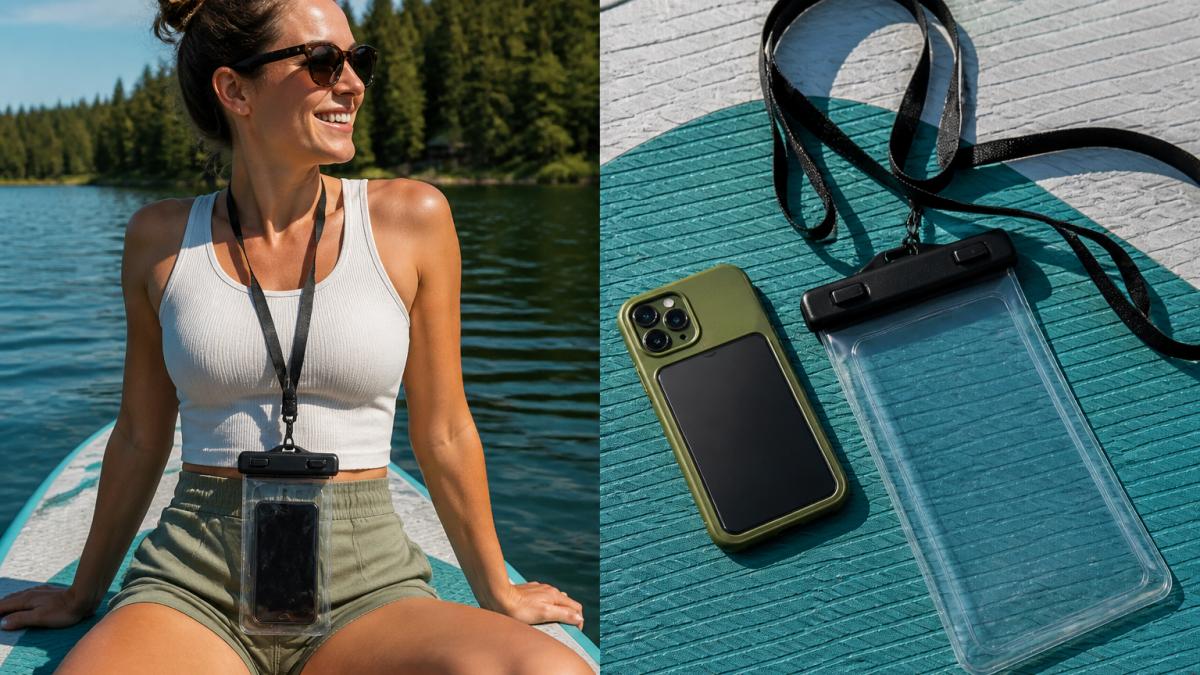
Pick a pouch if you're a casual water person. It's light, cheap to replace, and easy to stash when you're back on dry land. The catch: touchscreen response through the plastic is slower, and photos can look hazy.
Pick a case if water is part of your routine. It stays on, protects against drops too, and you never forget it at home. The trade-off is bulk and the need to maintain the seal.
Neither is "better." They solve different problems. Match the product to your actual week, not to a worst-case scenario you'll hit twice a year.
How to Test a Waterproof Phone Case Before You Trust It
Always test a new waterproof phone case before your phone goes anywhere near water. A two-minute check saves you from a very expensive mistake.
Here's the simple method:
- Remove your phone and close the case or pouch exactly as you would in real use
- Check the seal and closure for any grit, hair, or dust
- Trap a small piece of tissue or paper inside
- Submerge the empty case in a bowl of water for a few minutes
- Take it out, dry the outside, and open it
- Check whether the tissue stayed completely dry
If the tissue is dry, the seal is working. If it's damp, stop and reseal. Repeat the test before every water trip, especially after the case has been dropped or left in the sun.
A common mistake is testing once and trusting it forever. Seals degrade. Test again before each water day.
Daily Wear, Seal Care, and When to Replace Your Case
Seals wear out, and that's the part most guides skip. A waterproof phone case is only as good as its closure, and closures age with heat, sunscreen, salt, and repeated opening.
Signs it's time to replace your case:
- The closure feels loose or doesn't snap firmly
- You see cracks, cloudiness, or stretching in the seal material
- The case has taken a hard drop
- It's been through a full season of beach or pool use
- Water got in during a test
For long-term care, rinse the case in fresh water after salt or pool exposure, dry it fully before closing, and store it open so the seal can rest. Keep it out of direct sun when you can, since heat speeds up seal wear.
If you use your case hard, plan to replace it each season. Treat it as a wear item, not a one-time buy.
Choosing a Case That Matches Your Style and Your Risk
The best waterproof phone case is the one you'll actually carry, which means style matters as much as specs. A case you love stays on your phone. A case you tolerate gets left in a drawer.
Low risk, dry routine: desk job, indoor workouts, dry commute. Your phone's built-in IP68 resistance handles rain and the occasional sink drop. A standard protective case covers drops and scratches.
Medium risk, occasional water: rainy city, beach visits a few times a year, poolside lounging, hiking near streams. A water-resistant case or a quality pouch works well.
High risk, water is part of your week: paddleboarding, kayaking, boating, swimming, working around water, or living near the coast. Go with a rated waterproof case (IPX8 or IP68) and treat the seal as a wear item.
A few practical checks before you commit:
- Does the case list an actual IP rating, or just the word "waterproof"? The rating is the only claim you can trust.
- Can you seal it one-handed? If closing it is fiddly, you'll skip it on the days you need it most.
- Does it work with your wireless charger, or will you be pulling the case off every night?
- How does it feel in your pocket or bag? Bulk you resent is bulk you'll leave behind.
- Does the brand explain how to inspect and replace the seal? If not, plan to replace the case each season.
One more thing worth knowing: water resistance is not the same as a warranty against liquid damage.
At Snap Bands, we build phone cases and watch bands for women who want protection that still looks like them.
That's the point. The right case fits your real life, not an imaginary one.
Frequently Asked Questions
Is a waterproof phone case worth it for everyday use?
It depends on your daily exposure to water, dust, and drops. If you commute in rain, spend weekends near water, or work outdoors, a waterproof phone case adds meaningful protection beyond your phone's built-in water resistance. If your phone rarely leaves a dry office or car, a stylish everyday case with decent drop protection may be the better fit. Think about your real routine, not worst-case scenarios, and match the case to the risks you actually face.
Do waterproof phone cases affect touchscreen sensitivity?
Most quality waterproof phone cases allow normal touchscreen use, though some reduce sensitivity slightly at the edges or when the screen is wet. Pouches with clear front panels often work well for scrolling and tapping but can feel less responsive than a bare screen. Test your case before relying on it for important tasks like typing long messages or navigating in the rain. If responsiveness drops, dry the screen surface and try again.
Will a waterproof case protect a phone from drops?
Not all waterproof cases are shockproof. Some focus on sealing out water and offer minimal impact protection, while others combine both. If drops are your main concern, look for a case that explicitly mentions shockproof or impact protection alongside its water resistance rating. A waterproof pouch, for example, will keep water out but may not survive a hard fall onto concrete. Match the case type to the threats your phone actually faces.
How often should you test a waterproof phone case?
Test your case before any trip where water exposure is likely, and recheck the seal every few weeks with daily use. Seals wear down from repeated opening, sunscreen, sand, and temperature changes. A simple at-home test with a paper towel inside the case and a bowl of water can reveal leaks early. Replace the case if you notice moisture, a loose closure, or visible wear on the gasket. Regular checks take a minute and can save your phone.
Your phone's built-in resistance handles the small stuff, but it won't save you from a lake, a pool, or a wave. If water shows up in your week, the right case is worth it. At Snap Bands, we make stylish, durable phone cases and watch bands designed to go from the office to your next adventure. Explore our customizable colors and patterns, find a look that's yours, and get protection you'll actually want to wear. Shop now and carry your phone with confidence.

