

Table of Contents
- How Magnetic Watch Bands Actually Stay On
- Magnet Strength and Holding Power
- Why Smooth Engagement Beats Snapping Force
- The Practical Weightlifting Security Test
- Magnetic Closure vs Mechanical Locking: What Holds Up in the Gym
- Choosing Apple Watch Bands for Weightlifting
- Sport Loop vs Magnetic Link for Workouts
- How Tight to Wear an Apple Watch During Exercise
- Sweat-Resistant Apple Watch Bands for the Gym
- Grip, Barbells, and Equipment Interaction
- Frequently Asked Questions
Last Updated: October 18, 2026
How Magnetic Watch Bands Actually Stay On
Magnetic watch bands are secure enough for weightlifting when the magnet array is strong and the band fits correctly. The closure relies on overlapping magnets, not a buckle, so holding power depends on surface contact and a snug fit.

That answer surprises people. Most lifters assume a clasp is safer by default. But a well-made magnetic strap can hold through a full session, and a badly fitted one will slip no matter what locks it.
At Snap Bands, we hear this question constantly from women who train hard and still want a band that looks polished.
Here's what most guides get wrong: they treat all magnetic bands as one category. They aren't.
Magnet Strength and Holding Power
Holding power comes down to the magnets inside the strap, but not in the way most guides suggest.
Strong neodymium magnets create a firm pull across the overlap, which is why a well-made magnetic clasp stays put through repeated wrist movement. But the pull is only half the story.
A few things affect grip:
- Magnet grade: stronger magnets resist sliding better, but only when the array is arranged to spread force across the overlap
- Overlap length: more contact area means more hold; a short overlap concentrates force in one spot and slides more easily
- Band stiffness: a band that keeps its shape keeps its grip; a floppy band peels at the edges under load
- Wrist fit: a loose band shifts, and shifting breaks the seal between magnet layers
- Closure design: how the two layers meet, flat-to-flat, interlocking tabs, or a magnetic buckle, determines whether force stays even or concentrates at a single point
Here is the mechanism in plain terms. When you grip a bar, your wrist flexes and rotates. That motion applies shear force across the band's overlap.
Cheaper bands use weaker magnets or fewer of them, and they often pair that with a short overlap. Those are the ones that pop loose mid-set.
The takeaway is simple. Magnet strength matters, but contact area, closure design, and fit matter just as much. A band is only as secure as its weakest link, and that link is usually the overlap, not the magnet.
Why Smooth Engagement Beats Snapping Force
A magnetic closure should engage smoothly, not snap hard. Smooth engagement means the magnets align across the full overlap, which spreads holding force evenly.
Bands that snap aggressively often do it because the magnets are small and clustered. That creates a strong pull in one spot and weak hold everywhere else.
Smooth closure also protects the band. Repeated hard snapping wears the coating and can loosen the magnet housing over time.
What most guides miss is this: a gentle, even pull is a sign of a better-built strap. If your band clicks together with a light glide, that's a good sign.
The Practical Weightlifting Security Test
The best way to know if a magnetic band is gym-ready is a two-minute test you can do before your first set. It checks grip under real wrist movement.
Here's how to run it:
- Fit check: fasten the band so it sits snug but not tight. You should fit one fingertip under it, no more.
- Shake test: shake your wrist firmly for ten seconds. The band should not slide or loosen.
- Grip test: hold a light dumbbell and do ten wrist curls. Watch for any shift at the overlap.
- Press test: press your palm flat against a wall and lean in. The band should hold without creeping.
- Reset check: unfasten and refasten. The closure should feel the same every time.
If the band passes all five, it's ready for a real session. If it fails any step, tighten the fit or switch bands.
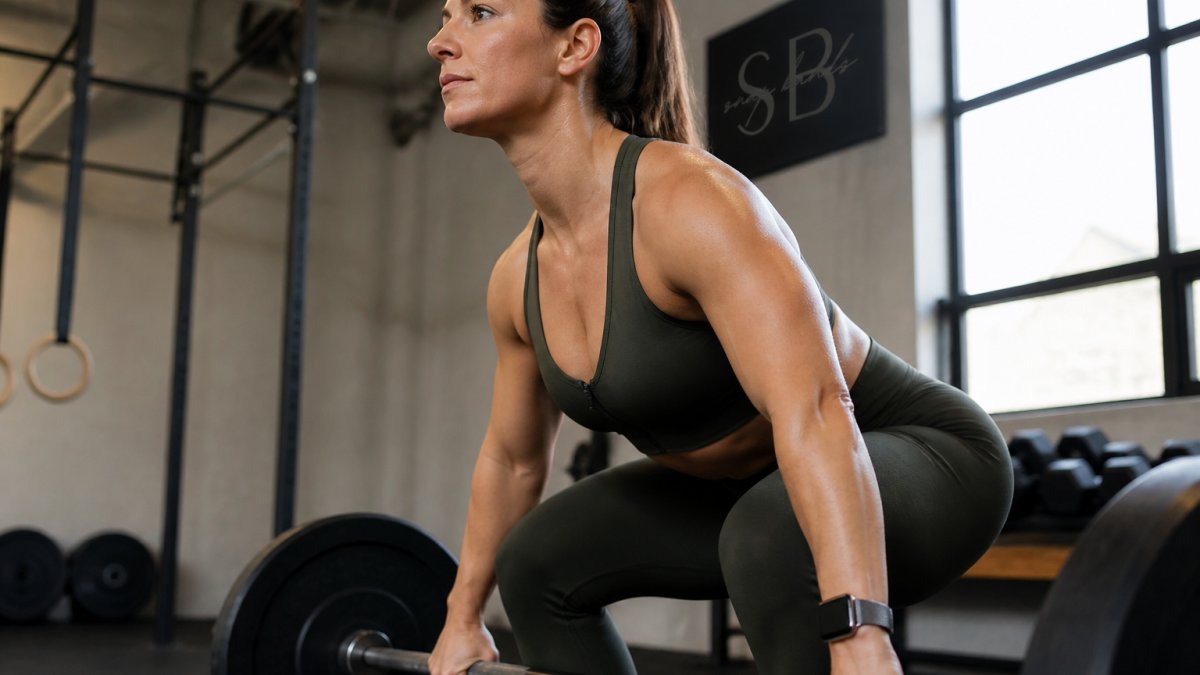
Magnetic Closure vs Mechanical Locking: What Holds Up in the Gym
Mechanical locking wins on raw security. A buckle or clasp physically traps the strap, so it cannot slide apart no matter how hard you pull.
Magnetic closure wins on comfort and speed. There's nothing to thread, nothing to pinch, and nothing digging into your wrist during a set.
So which should you wear? It depends on the lift.
| Factor | Magnetic Closure | Mechanical Locking |
|---|---|---|
| Raw holding force | Strong with good fit | Very strong |
| Adjustability | Infinite, slides to fit | Fixed holes or links |
| Comfort under load | Smooth, no hard edges | Buckle can press in |
| On and off speed | Fast | Slower |
| Best for | Most gym sessions | Heavy pulling days |
For most training, a quality magnetic band is plenty. For max-effort deadlifts or heavy rows, a mechanical lock gives extra peace of mind.
Choosing Apple Watch Bands for Weightlifting
Apple Watch bands for weightlifting should be snug, sweat-friendly, and low-profile. The best pick balances a secure fit with a material that won't trap moisture or snag on equipment.
Start with these priorities:
- Secure fit: adjustable so you can tighten for training
- Sweat resistance: easy to wipe clean after a session
- Low profile: nothing bulky to catch on a bar
- Comfort: smooth edges that won't rub during reps
Our Betta Magnet Band is a strong everyday pick. It has an adjustable magnetic buckle that fits your wrist like a glove, plus a slim, sleek design that won't get in the way under a barbell. It comes in eight color finishes, so it moves from the gym to the office without looking out of place.

If you want silicone for sweaty sessions, the Mino Silicone Magnetic Watch Band is built for all-day comfort. The magnetic closure means no buckles or clasps pressing into your wrist mid-lift.
Sport Loop vs Magnetic Link for Workouts
Sport Loop and Magnetic Link solve different problems. The Sport Loop is a woven nylon band with a hook-and-loop closure, built for sweat and quick adjustments.
For workouts, the Sport Loop has the edge on breathability. Nylon dries fast and the hook-and-loop closure lets you tighten it mid-session without thinking.
The Magnetic Link shines on fit and finish. A stainless steel mesh strap like our Magnetic Loop Band Mage gives a secure, comfortable fit that's neither too loose nor too tight.

Here's the honest trade-off. The Sport Loop handles heavy sweat better. The Magnetic Link looks sharper and adjusts more precisely.
For a hybrid approach, a silicone magnetic band splits the difference. The Mino gives you sweat-friendly silicone with the convenience of a magnetic closure.
How Tight to Wear an Apple Watch During Exercise
An Apple Watch should sit snug during exercise, tight enough that it doesn't slide but loose enough to avoid pinching. A good rule: you should fit one fingertip under the band, and no more.
Too loose and the watch slides, which throws off heart rate readings and lets the band shift under load. Too tight and it restricts your wrist and traps sweat against your skin.
Quick fit checklist:
- The watch face stays centered on your wrist during reps
- The band doesn't rotate when you turn your wrist
- No red marks or deep indentations after ten minutes
- You can slide one fingertip under the edge
For lifting, err slightly snug. A magnetic band makes this easy because you can adjust it in seconds between sets.
Sweat-Resistant Apple Watch Bands for the Gym
Sweat-resistant Apple Watch bands for the gym should wipe clean, dry fast, and resist odor. Silicone and stainless steel mesh lead here, while nylon needs more frequent washing.
Material rundown:
- Silicone: wipes clean, dries fast, great for heavy sweat
- Stainless steel mesh: rinse and pat dry, resists odor well
- Nylon woven: breathable but absorbs sweat, needs regular washing
Cleaning is quick. Rinse the band in cool water after training, pat it dry with a soft cloth, and let it air out fully before your next session.
Skin irritation usually comes from trapped moisture, not the material itself. A snug-but-not-tight fit and a clean, dry band prevent most problems. If you have sensitive skin, silicone is often the gentlest choice.
Grip, Barbells, and Equipment Interaction
A watch band should never interfere with your grip, and the equipment you train with determines how much risk a band actually adds.
Barbells and knurling. A barbell's knurling is aggressive by design.
Racks and J-hooks. When you unrack a squat or press, your wrist passes close to the J-hook.
Cable attachments and handles. Cable work is where loose bands cause the most distraction.
Dumbbells. Dumbbell heads are bulky and can press against the wrist during curls and presses.
Pull-up bars and rings. Grip-intensive work is the highest-risk category for any watch band. A loose band can catch on a bar or ring as you rotate through a pull-up.
A few practical habits help across all of these:
- Rotate the watch so the face sits on the inner wrist for pressing moves
- Keep the band snug so it cannot rotate on its own
- Check the overlap before any heavy pull
- Skip loose metal bands for grip-intensive work like deadlifts
- Clear the J-hook path before you unrack
For pulling movements, a secure fit matters most. If the band can slide, it can catch. That is the theory.
Frequently Asked Questions
Are magnetic watch bands secure enough for weightlifting?
Yes, for most lifters, as long as the band is properly fitted and the magnet is strong. Magnetic watch bands rely on neodymium magnets and a smooth, adjustable closure, which holds well during repeated wrist movement. The bigger risk is a loose fit, not the magnet itself. Before lifting, do a quick shake and wrist-flex test, and slide the band so it sits snug but not tight. If you deadlift heavy or do Olympic lifts, consider a mechanical closure for extra peace of mind.
Can sweat make a magnetic watch band slip?
Sweat alone won't release a strong magnet, but it can reduce grip between the band and your skin, which makes a loose fit feel looser. Wipe the band and your wrist dry before a session, and choose a sweat-resistant material like silicone or stainless steel mesh over fabric. Rinse and dry the band after training to keep the closure clean and the magnets free of grit. If you notice slipping mid-set, tighten the band by one notch or switch to a Sport Loop for that session.
Is a Sport Loop or magnetic band better for weightlifting?
It depends on the lift. A Sport Loop's hook-and-loop closure is very secure and easy to adjust, which suits high-rep and sweaty sessions. A magnetic band, like the Betta Magnet Band or Magnetic Loop Band Mage, offers a sleek adjustable fit and works well for most strength training. For heavy deadlifts or cleans, a mechanical closure or a snug Sport Loop is the safer pick. Many lifters keep both and swap based on the workout.
How tight should an Apple Watch band be during a workout?
Snug enough that the watch doesn't rotate on your wrist, but loose enough to slide a finger under the band. A good test: make a fist and flex your wrist. If the watch shifts more than a few millimetres, tighten it. Too tight can restrict wrist movement and cause skin irritation, especially under a barbell. Adjust the magnetic closure by one notch at a time, and recheck after your warm-up set when your wrist has warmed up.
Lifting asks a lot of your gear, and your band should keep up without you thinking about it. At Snap Bands, we design bands that stay secure through a workout and still look polished at your desk. Our magnetic bands offer an adjustable fit, comfortable all-day wear, and durable construction built for worry-free use. Browse our collection and find the band that moves with you from the gym to everywhere else.

