

Last Updated: November 5, 2026
Quick Summary
Sustainable tech gadgets cut energy and resource use across their whole life, from manufacture to daily operation. They lower energy consumption and bills through automation, and because manufacturing carries most of a device's environmental impact, choosing durable gadgets you keep for years shrinks your footprint without a lifestyle overhaul.
- Smart thermostats, lighting, and plugs each attack a different source of waste, so they stack rather than overlap.
- A home energy monitor clamps onto your electrical panel and shows what each appliance actually costs to run.
- Check for a user-replaceable battery, published repair guides, and offline function before buying any connected device.
- In a cold climate a smart thermostat comes first; in a hot, dry region cooling and irrigation matter more.
- Add devices one at a time, live with each for a week, then add the next.
Table of Contents
- Why Sustainable Tech Gadgets Belong in Your Home
- The Benefits of Smart Home Technology That Actually Matter
- Energy-Efficient Home Gadgets Worth Choosing
- How to Reduce Energy Use at Home Without a Full Renovation
- The Hidden Side of Smart Devices: Lifecycle, Privacy, and Compatibility
- How to Choose Sustainable Tech Gadgets That Fit Your Life
- Styling Your Sustainable Tech: Cases and Bands That Last
- Start With One Smart Upgrade This Week
- Frequently Asked Questions
Why Sustainable Tech Gadgets Belong in Your Home
Sustainable tech gadgets are devices designed to cut energy and resource use across their whole life, from manufacture to daily operation. Research published in Buildings journal on the sustainable values of smart homes found that smart homes can reduce environmental burdens and maintenance costs while supporting residents' health and well-being. Accessories that last longer are a practical part of sustainable living, and that same logic applies to the tech itself.
The stakes are simple: electricity you don't use is money you keep and carbon you never emit.
The Benefits of Smart Home Technology That Actually Matter
Strip away the marketing and the benefits of smart home technology come down to two things: less energy consumed and less stuff thrown away. A 2021 article in Energy Research & Social Science on culture, energy and climate sustainability describes smart homes as central to discussions about energy efficiency, climate change, and building sustainability. That's the promise. Here's what it looks like in practice.
Lower Energy Consumption and Smaller Bills
Automation removes the human error that inflates bills. A thermostat that learns your schedule stops heating an empty house. Smart plugs kill standby power on devices you forget are even on. Smart lighting dims and schedules itself instead of burning all evening.
The savings compound quietly. You won't notice a dramatic drop in week one, but over a season, the small corrections add up to real cost savings on utility bills.
Less Waste and a Lighter Footprint
Durability is the underrated sustainability feature. A gadget you keep for six years beats a cheap one you replace twice, because manufacturing carries most of a device's environmental impact. Moeve notes that sustainable gadget design considers both manufacturing and energy use during operation, which means the greenest device is often the one you don't have to replace.
Buy once, keep it longer, and your carbon footprint shrinks without a single lifestyle overhaul.
Energy-Efficient Home Gadgets Worth Choosing
Start with the devices that deliver the clearest returns, then layer in the ones that close the gaps your first three can't reach. The strongest eco-friendly device list for a home usually runs in this order: smart thermostats, smart lighting, smart plugs, home energy monitors, smart irrigation or water monitors, and solar-powered or energy-harvesting gadgets. Each one attacks a different source of waste, so they stack rather than overlap.
Smart Thermostats, Lighting, and Plugs
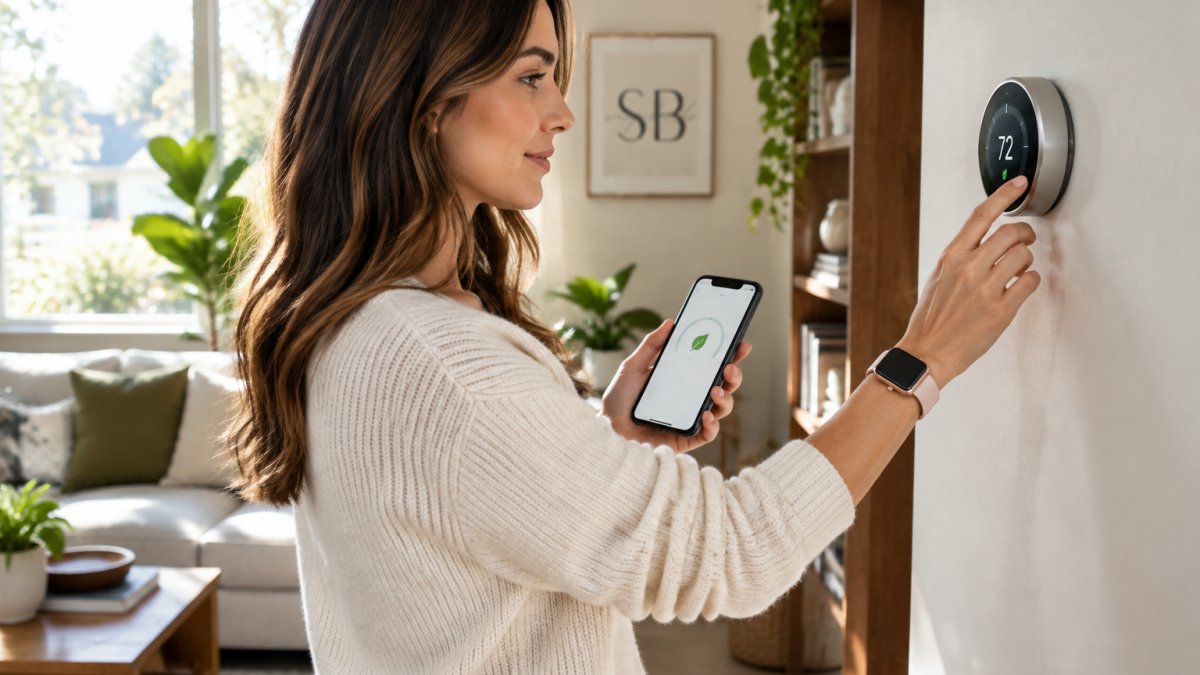
Heating and cooling are often a large share of a home's energy use, so a smart thermostat can be a useful upgrade. It learns your patterns and stops conditioning empty rooms. Smart lighting with LED bulbs uses a fraction of the electricity of old incandescent fixtures, and scheduling means lights aren't left on by accident. Smart plugs add appliance power management to anything you already own, cutting standby power at the outlet.
| Device | What It Fixes | Best For |
|---|---|---|
| Smart thermostat | Heating and cooling waste | Homes with irregular schedules |
| Smart lighting | Lights left on, inefficient bulbs | High-traffic rooms and entryways |
| Smart plugs | Standby power drain | Older appliances, home offices |
| Energy monitor | Invisible electricity use | Anyone who wants data first |
| Smart irrigation controller | Outdoor water waste | Households with sprinklers or drip lines |
| Solar-powered gadget | Small always-on loads | Garden lights, sensors, chargers |
Home Energy Monitors: See Before You Save
A home energy monitor is the device that tells you whether any of the others are working. Whole-home monitors clamp onto your electrical panel and break consumption down by circuit or appliance, so you can see what your refrigerator, dryer, or space heater actually costs to run. Pair it with the smart plugs so you can act on what the data shows.
Water Conservation and Smart Irrigation
Water is a benefit that often gets overlooked. A smart irrigation controller adjusts watering to local weather and soil moisture instead of running a fixed schedule through a rainstorm. Indoors, a smart water monitor or leak sensor catches a running toilet or a slow supply-line leak that would otherwise show up only on the bill.
Solar-Powered and Energy-Harvesting Gadgets
Solar-powered gadgets make sense for small, always-on loads that would otherwise draw from the grid: garden and path lights, outdoor security cameras, soil sensors, and small chargers. They won't run a heat pump, but they remove a steady trickle of demand and they keep working during an outage. Choose models with replaceable batteries so the panel outlives the cell.
Add devices one at a time, live with each for a week, then add the next.
How to Reduce Energy Use at Home Without a Full Renovation
You don't need new wiring or a contractor to reduce energy use at home. Start with behavior and cheap devices, then scale up only where the data justifies it. Here's the order we'd follow:
- Swap remaining bulbs for LEDs, room by room.
- Add smart plugs to entertainment centers and home office setups.
- Install a smart thermostat and set a schedule for a week.
- Add a home energy monitor to see what's actually drawing power.
- Move to smart irrigation or a water monitor if your water bill is high.
The Hidden Side of Smart Devices: Lifecycle, Privacy, and Compatibility
The uncomfortable truth is that a "smart" device can be less sustainable than a dumb one if it's poorly made or abandoned by its manufacturer. Most coverage stops at electricity use during operation. The fuller picture weighs manufacturing footprint, product lifespan, repair options, battery replacement, and end-of-life disposal alongside daily energy draw. That's the angle worth claiming, because it changes which device you should actually buy.
Lifecycle Impact: Manufacturing, Repair, and E-Waste
Manufacturing carries most of a device's environmental impact, so lifespan is the single biggest lever. A gadget you keep for six years beats a cheap one you replace twice. Before buying, check three things: whether the battery is user-replaceable, whether the manufacturer publishes a repair guide or sells parts, and whether the device still works offline if the cloud service ends. Cloud-dependent gadgets can become e-waste the moment a company stops supporting them, so local control and a published support window matter as much as the spec sheet.
Privacy and Cybersecurity Trade-offs
Every connected device is a data-collecting endpoint. Choose brands with clear privacy policies, security-update commitments, and local-control options where possible. Ask whether the device needs an account at all, whether it functions without the app, and how long the manufacturer promises security patches. A device that stops receiving updates is both a privacy risk and a lifecycle risk.
Compatibility and Avoiding Unnecessary Upgrades
Compatibility is the quiet budget-killer. Buying within one ecosystem, and checking that accessories fit before you upgrade, prevents the unnecessary replacement cycle that wastes both money and materials. Look for devices that support common standards such as Matter or Thread so they keep working with the hub you already own. If you're weighing band options for a watch you already own, our breakdown of third-party vs official Apple Watch bands covers fit and longevity in detail.
A Simple Evaluation Framework
Use independent efficiency criteria rather than marketing claims: check standby power draw, look for recognized efficiency certifications, confirm compatibility with your existing system, verify durability and repair support, and read the data-transparency and privacy terms.
Prioritizing Upgrades by Household and Climate
The right order depends on your home, not a generic list. In a cold climate, heating dominates, so a smart thermostat comes first. In a hot, dry region, cooling and irrigation matter more. Renters should favor plug-in devices they can take with them; owners can justify panel-level monitors and thermostats. Start with your largest energy or water use, confirm it with a monitor, then upgrade there.
How to Choose Sustainable Tech Gadgets That Fit Your Life
The best sustainable tech gadgets are the ones you'll actually use, keep, and maintain. Use this checklist before you buy:
- Does it solve a problem you have weekly, not theoretically?
- Can you find repair parts or a replacement battery?
- Does it work with the ecosystem you already own?
- Is there a clear privacy policy and local-control option?
- Will the accessories for it still exist in two years?
A common mistake is chasing the newest device instead of the most durable one. In practice, the gadget that survives five years of daily use is the sustainable choice, full stop.
Styling Your Sustainable Tech: Cases and Bands That Last
Sustainability has a style dimension, and it's the one we care about most. A phone case or watch band that lasts two years instead of six months keeps materials out of landfill and keeps your devices protected long enough to justify keeping them.
If you're protecting a device for the long haul, browse our durable Kindle cases and protective phone cases for options designed to hold up. For watch wearers, our nylon bands offer a low-waste, long-lasting alternative, and the Ardito vegan leather band suits anyone who wants a vegan option with staying power.

Start With One Smart Upgrade This Week
The gap between wanting a greener home and having one can start with a single decision. Pick one device, set it up properly, and let the savings prove themselves before you add the next. That's how sustainable technology actually sticks: one small, durable, well-chosen upgrade at a time.
Snap Bands offers durable construction, customizable colors and patterns, and third-party bands compatible with Apple Watch and other brands. For current prices, visit our website. Protect the tech you already love instead of replacing it. Get started with Snap Bands and give your devices accessories that last as long as they do.
Frequently Asked Questions
What are the benefits of sustainable tech gadgets for the home?
Sustainable tech gadgets can lower energy consumption and utility bills, reduce your carbon footprint, and cut household waste. Smart homes can help reduce environmental burdens and maintenance costs. Many devices also add convenience, like thermostats that learn your schedule or plugs that shut off standby power. Choosing repairable, well-made gadgets extends their life, so you buy and discard less over time.
How can energy-efficient home gadgets help reduce energy use at home?
Energy-efficient home gadgets tackle waste in small, repeatable ways. Smart thermostats adjust heating and cooling to match when rooms are actually occupied. Smart plugs cut standby power from appliances and chargers. LED bulbs and smart lighting use a fraction of the electricity of older bulbs and can dim or switch off automatically. Together these changes add up, and a home energy monitor shows you which devices draw the most so you can prioritize.
Do sustainable tech gadgets help reduce household waste?
They can, especially when you choose devices built to last and repair rather than replace. Durable, repairable gadgets stay out of landfill longer, and features like smart irrigation reduce water waste outdoors. Sustainable gadgets are designed to minimize environmental impact across their life cycle, including manufacturing and energy use during operation. Pairing energy monitoring with mindful disposal, such as recycling old electronics, keeps the waste reduction going.
How do I make my home technology more sustainable without replacing everything?
Start with the devices that run constantly: heating and cooling, lighting, and anything on standby. A smart thermostat and a few smart plugs deliver savings without a full overhaul. Check compatibility before buying so new gadgets work with what you own, and avoid upgrades you don't need. Keep accessories like phone cases and watch bands in good condition and choose durable materials, so your everyday tech lasts longer and looks good doing it.


